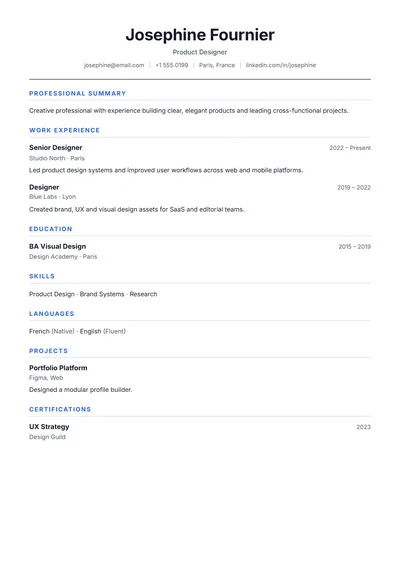
Simple
NewA genuinely simple resume: centred name, hairline rules, one column. Nothing to distract, nothing to break.
Use this templateTemplate guide
The format most recruiters expect: your most recent job first, then back in time. Dates sit in their own left column and a dotted connector joins each entry, so progression is visible before anyone reads a word.
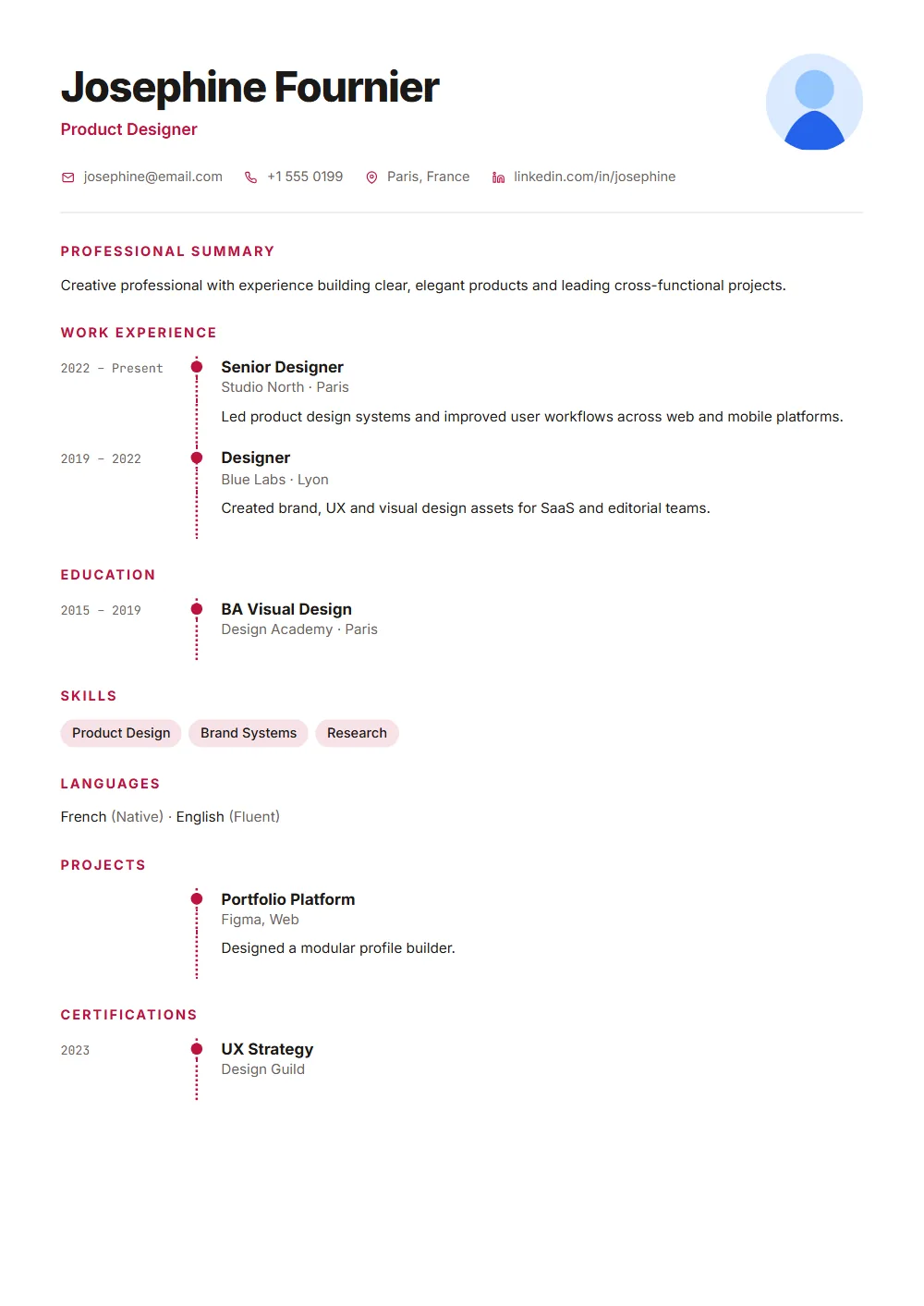
They answer the recruiter's first three questions immediately: what are you doing now, how long have you done it, and is your career moving upward. The left-hand date column in this template makes the third one visible at a glance: promotions read as a staircase.
Title, employer, city and dates on the first lines. Then two to five bullets, most impressive first:
Promoted from analyst to senior analyst in 18 months, ahead of the usual three years.
Rebuilt the monthly reporting pack; preparation time fell from four days to one.
Give recent jobs more bullets than older ones. Anything more than ten to fifteen years back can shrink to a single line, or go.
Use month and year ("Mar 2021 - Present") for recent roles. Years alone are fine for jobs over five years ago. If you held two roles at one employer, list the employer once and both titles under it with their own dates; it shows the promotion.
If your last few titles do not match the job you want, or there is a long gap at the top of the page, look at the Functional template. If you have no work history yet, Entry Level and Student put education first.
Three close alternatives, and every one carries your content across untouched when you switch.
A genuinely simple resume: centred name, hairline rules, one column. Nothing to distract, nothing to break.
Use this template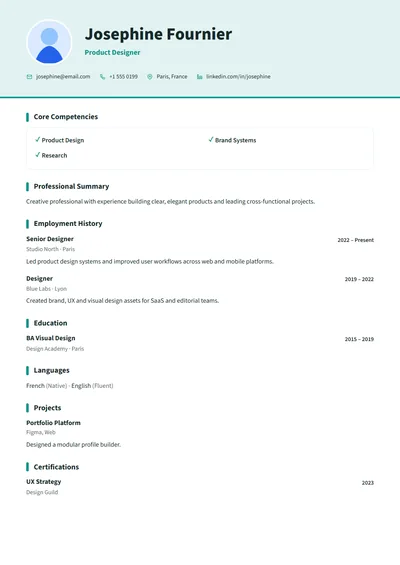
Skills-first functional CV for career changers and gaps in employment history.
Use this template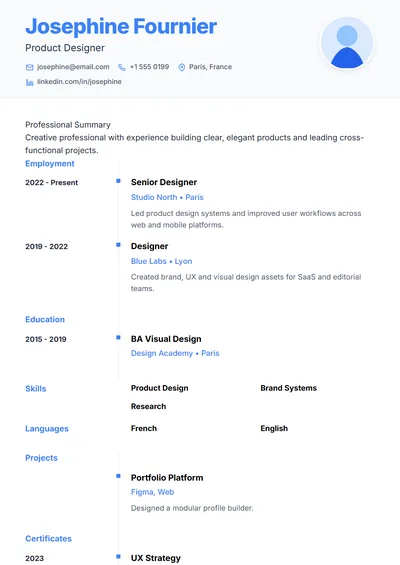
Two-column layout with a timeline spine and photo header — the all-round favourite for corporate applications.
Use this templateFAQ
A resume that lists your work experience starting with the current or most recent job and moving backwards. It is the most common format and the one most recruiters prefer.
Yes. This template is one column with real text, standard headings and dates in a consistent format, which is what applicant tracking systems read best.
Usually ten to fifteen years. Older roles can be cut or summarised in one line unless they are directly relevant to the job.
Only if you graduated within the last two years or the job asks for a specific degree. Otherwise experience goes first.