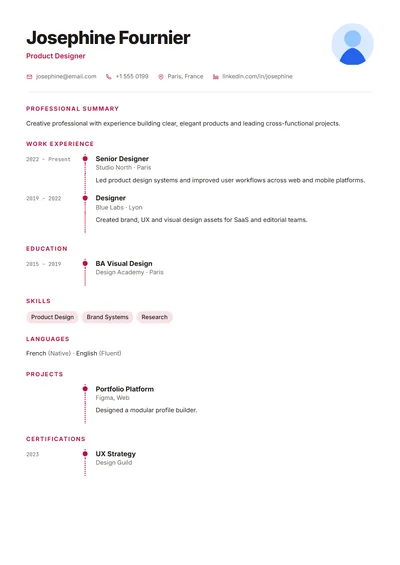
Chronological
TrendingReverse-chronological layout with a dotted connector on every entry.
Use this templateTemplate guide
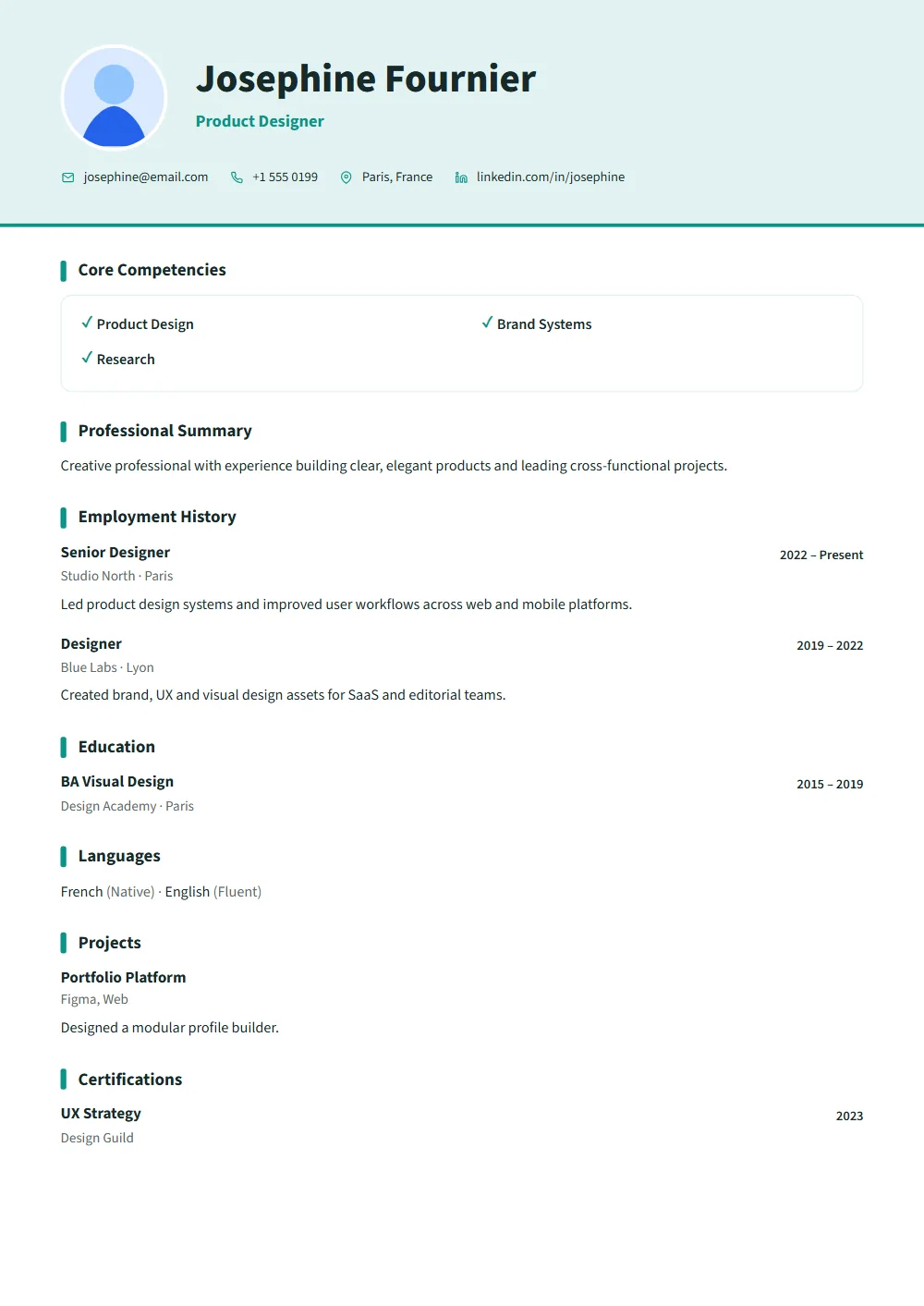
A skills-first resume. Core Competencies sit at the top of the page in a two-column checklist, followed by your strengths and achievements; Employment History comes after, kept short. Built for people whose job titles do not tell the story on their own.
A reverse-chronological resume makes your latest job title the headline. That is a problem when the title is the wrong one: a teacher applying for instructional design, a parent returning after five years, a soldier moving into logistics management. A functional resume puts what you can do first and lets the job history support it.
Core Competencies. Six to nine skills, taken from the job posting you are applying to. "Stakeholder communication" beats "good communicator".
Achievements. This is the section that makes a functional resume credible. Group two or three results under each competency, wherever you earned them:
Training design: built a 6-week onboarding course for 40 new staff; time to full productivity fell from 10 weeks to 7.
Budgeting: managed a $120,000 department budget and closed two years under plan.
Employment History. Every job, with employer, title and dates. Keep each one to a line or two. Leaving jobs out is what gave functional resumes a bad name; recruiters read missing dates as something to hide.
Many recruiters prefer chronological resumes because they can see what you did when. A functional resume is the right tool when chronology works against you, not a default. A useful middle ground: keep this layout but write two good bullets under each recent job, so the history carries weight too.
Three close alternatives, and every one carries your content across untouched when you switch.
Reverse-chronological layout with a dotted connector on every entry.
Use this template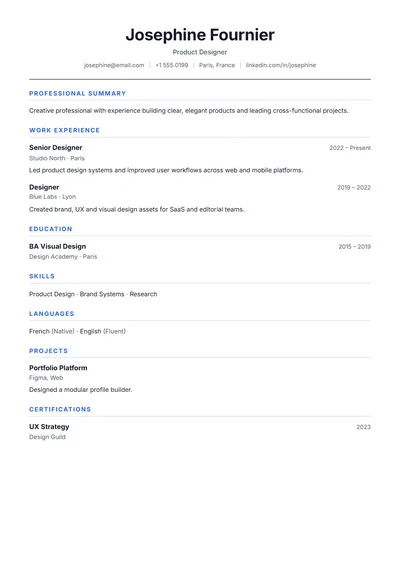
A genuinely simple resume: centred name, hairline rules, one column. Nothing to distract, nothing to break.
Use this template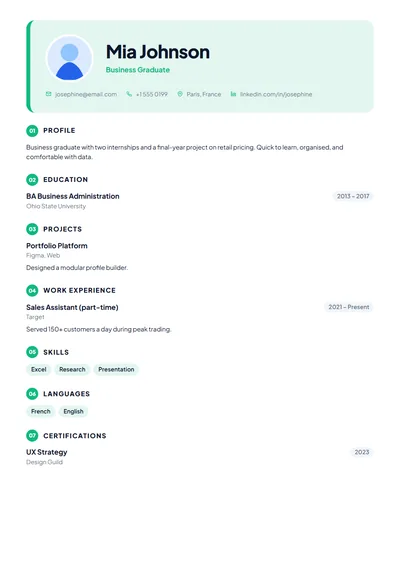
For a first job: education, internships and projects lead, with numbered section badges.
Use this templateFAQ
A resume organised around skills and achievements instead of job-by-job history. The skills come first; employment history follows in a short list.
The layout is: this template is one column with standard headings. The risk is content, not format. Always include employers, titles and dates, because many systems and recruiters look for them.
When you are changing careers, returning after a gap, or have many short or unrelated jobs. If your recent titles match the job you want, a chronological resume is stronger.
Yes. Add the period to Employment History with a short honest label, such as 'Career break: full-time carer' or 'Relocation and retraining', and list any course you took in that time.